
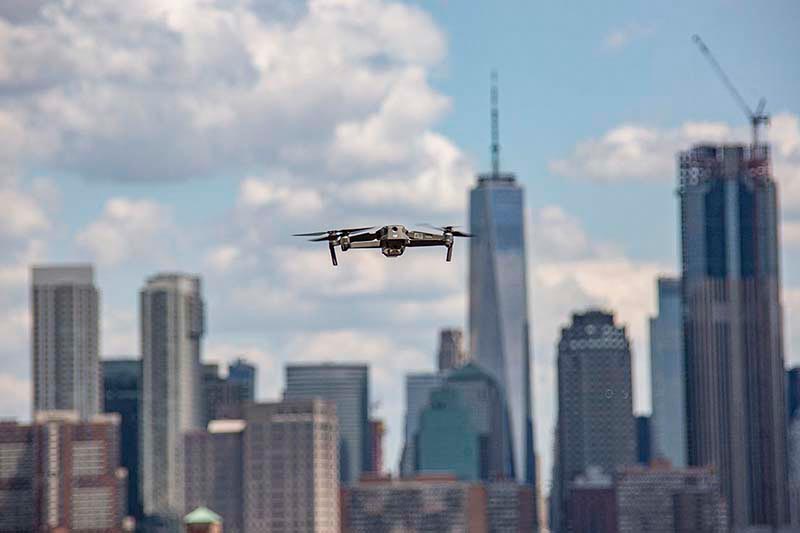
Flying a Drone in NYC sounds like something straight out of a cinematic skyline reel. Between the towering skyscrapers, the East River, iconic bridges, and breathtaking sunsets over Manhattan, New York City feels like the ultimate place to capture aerial footage. But before you launch your DJI Drone into the skies over New York City, there are some very important rules, laws, and FAA requirements you need to understand.
The reality is that NYC is one of the most heavily regulated airspaces in the United States. Between FAA restrictions, NYPD permit requirements, Remote ID compliance, and the TRUST certification process, drone pilots need to know exactly what’s legal and what could land them with fines, confiscated equipment, or worse.
Whether you’re flying a DJI Mini, DJI Air, DJI Mavic, or even an FPV Drone setup, this guide will walk you through everything required to legally fly a Drone in NYC.
Why NYC Is Different From Other Cities
New York City is unlike most places in the country because of its dense population, complex airspace, and security concerns. NYC sits within controlled airspace that overlaps major airports including:
- JFK International Airport
- LaGuardia Airport
- Newark Liberty International Airport
- Teterboro Airport
That means much of NYC falls under FAA Class B controlled airspace. In simple terms? The skies over New York City are extremely busy.
Even if your DJI Drone can physically take off, that does not mean you are legally allowed to fly there.
NYC also has local laws that regulate where drones can take off and land. Historically, drone operations in New York City were almost entirely banned unless you were law enforcement, media with special permissions, or flying at designated model aircraft fields.
That changed in 2023 when NYC introduced a permit process allowing people to apply for drone takeoff and landing permissions. (NYC Government)
What Is TRUST and Why Do You Need It?
If you plan to fly a Drone recreationally anywhere in the United States, including NYC, the FAA requires you to complete the TRUST certification.
TRUST stands for:
The Recreational UAS Safety Test
The FAA created TRUST to ensure recreational drone pilots understand airspace safety, FAA regulations, and safe flying practices. (Federal Aviation Administration)
The good news?
- TRUST is free
- It’s online
- It only takes about 30 minutes
- You cannot fail it permanently
Once completed, you receive a TRUST Certificate that you must keep with you while flying your Drone.
If law enforcement or the FAA asks for proof and you cannot provide it, you could face penalties.
For hobbyist Drone pilots flying a DJI Drone around NYC recreationally, TRUST is absolutely required. (Federal Aviation Administration)
Recreational vs Commercial Drone Flying
One of the biggest mistakes people make in New York City is misunderstanding the difference between recreational and commercial Drone operations.
Recreational Flying
You are considered a recreational pilot if you are flying:
- For fun
- As a hobby
- For personal enjoyment
- Not making money
For recreational flying, you need:
- TRUST Certificate
- FAA registration if your Drone weighs over 250 grams
- Remote ID compliance if required
- Permission to fly in controlled airspace
Commercial Flying
If you are using your Drone for:
- Real estate photography
- YouTube monetization
- Client work
- Business promotions
- Inspections
- Paid content creation
Then you likely need:
- FAA Part 107 License
- Drone registration
- Remote ID compliance
- NYC permits
- Airspace authorization
Many creators in NYC accidentally violate FAA regulations because they monetize YouTube videos featuring Drone footage. Once monetization enters the picture, the FAA may classify the operation as commercial.
FAA Drone Registration Requirements
Not every Drone requires FAA registration, but many do.
According to FAA regulations:
- Drones weighing over 250 grams must be registered
- Registration costs $5
- Registration lasts for 3 years (FAASafety)
Popular DJI Drone models requiring registration include:
- DJI Air series
- DJI Mavic series
- DJI Avata
- DJI Inspire
- DJI FPV
Some smaller drones, like certain DJI Mini models, may fall below the 250-gram threshold depending on accessories and batteries.
However, adding heavier batteries, prop guards, or accessories can push your Drone over the limit.
What Is Remote ID?
Remote ID is one of the most important Drone regulations currently enforced by the FAA.
Think of Remote ID like a digital license plate for your Drone.
Remote ID broadcasts information including:
- Drone location
- Drone altitude
- Operator location
- Drone serial number
- Flight information
The FAA requires most registered drones to comply with Remote ID regulations. (Federal Aviation Administration)
Most newer DJI Drone models already support Remote ID through firmware updates. (DJI)
If your Drone does not support Remote ID natively, you may need an external Remote ID broadcast module.
DJI Drones and NYC Flying
DJI dominates the Drone market and is the brand most pilots in NYC use.
Popular models include:
- DJI Mini 4 Pro
- DJI Air 3
- DJI Mavic 3
- DJI Avata 2
- DJI Inspire 3
DJI includes geofencing technology in many drones, which may warn or prevent pilots from flying in restricted areas.
However, pilots should never rely solely on DJI’s maps.
The FAA remains the final authority regarding legal Drone operations. (The Verge)
Always verify airspace using:
- FAA B4UFLY app
- Aloft Air Control
- LAANC systems
- FAA DroneZone
Can You Fly a Drone in Central Park?
This is one of the most searched Drone questions related to New York City.
The short answer?
Usually no.
NYC Parks rules heavily restrict Drone operations outside designated flying fields and approved permit areas. Unauthorized Drone operations in parks can result in fines and confiscation. (Dronesgator)
Central Park is generally not open for casual Drone flights unless specifically authorized.
Legal Places to Fly a Drone in NYC
New York City has several designated model aircraft fields where Drone flying is permitted under certain conditions.
These locations are significantly safer legally than randomly launching from sidewalks or rooftops.
Examples include designated flying fields in:
- Brooklyn
- Queens
- Staten Island
Some operators also apply for temporary NYPD Drone permits for special filming projects. (NYC Government)
NYC Drone Permit Process
As of 2023, NYC allows individuals to apply for Drone permits authorizing takeoff and landing within the city. (NYC Government)
The permit process involves:
- Providing Drone registration information
- Providing Remote ID details
- Listing flight locations
- Listing operation dates and times
- FAA compliance verification
Approval is not guaranteed.
NYC evaluates:
- Safety risks
- Nearby airports
- Public safety concerns
- Event conflicts
- Security concerns
This process can take time, so don’t expect same-day approval for a rooftop Manhattan Drone shoot.
Understanding FAA Airspace in NYC
NYC airspace is incredibly complicated.
Drone pilots must understand:
- Controlled airspace
- Altitude ceilings
- Temporary Flight Restrictions (TFRs)
- No-fly zones
In many parts of Manhattan, Drone flights may require FAA authorization even for low altitudes.
The FAA commonly limits Drone altitude to:
400 feet above ground level
However, in NYC, many areas may require far lower operational ceilings due to airport proximity.
Night Flying Rules
Yes, you can legally fly a Drone at night under FAA rules.
But there are requirements.
Your Drone must have:
- Anti-collision lighting visible for at least 3 statute miles
- Proper orientation lighting
- Compliance with FAA night operation requirements (Dronesgator)
Night flying in NYC is especially risky because of:
- Helicopter traffic
- News helicopters
- Police aviation
- Dense building interference
Can Tourists Fly Drones in NYC?
Yes — but they must still comply with all FAA and NYC regulations.
Tourists often assume they can simply unpack a DJI Drone in Times Square or Brooklyn Bridge Park and start filming.
That’s a fast way to meet NYPD officers.
Even visitors must have:
- TRUST certification
- Drone registration if applicable
- Remote ID compliance
- Airspace authorization where required
Common Drone Mistakes in NYC
Flying Without TRUST
Many recreational Drone users don’t realize TRUST is mandatory.
Ignoring Airspace Restrictions
DJI warnings are not enough. Always check FAA authorization tools.
Flying Near Airports
NYC has some of the busiest airspace in the world.
Flying Over Crowds
FAA rules heavily restrict operations over people.
Launching From Illegal Locations
Even if the sky is technically legal, takeoff and landing locations matter in NYC.
Tips for Safe Drone Flying in New York City
Use LAANC Authorization Apps
These apps help request FAA airspace authorization quickly.
Keep Visual Line of Sight
FAA regulations require you to maintain visual contact with your Drone.
Watch for Helicopters
NYC has constant helicopter traffic.
Avoid Emergency Scenes
Flying near police, fire, or emergency operations can result in serious penalties.
Respect Privacy
People in NYC are already used to cameras everywhere. A hovering Drone outside apartment windows? Not a great way to make friends.
What Happens If You Fly Illegally in NYC?
Illegal Drone operations can result in:
- FAA penalties
- NYPD fines
- Equipment seizure
- Criminal summonses
- Civil penalties
NYC has historically taken unauthorized Drone operations very seriously. (Dronesgator)
Best DJI Drones for NYC
Different DJI Drone models fit different NYC flying scenarios.
DJI Mini Series
Great for beginners and travel creators because of portability and lighter weight.
DJI Air Series
Excellent balance between portability and camera quality.
DJI Mavic Series
Professional-grade quality for commercial Drone operators.
DJI Avata
Popular for FPV-style cinematic flying.
However, regardless of the Drone you choose, NYC laws still apply.
A tiny Drone does not magically exempt you from FAA rules.
The Future of Drone Flying in NYC
Drone operations in New York City are evolving rapidly.
We’re already seeing:
- Expanded permit systems
- Increased Remote ID enforcement
- More FAA integration
- Growing commercial Drone services
- Drone delivery experimentation
As Drone technology improves, regulations will likely continue evolving.
For responsible Drone pilots, understanding FAA rules, NYC laws, TRUST certification requirements, and Remote ID compliance will become even more important moving forward.
Final Thoughts
Flying a Drone in NYC can produce some of the most stunning footage in the world. There’s nothing quite like capturing the New York City skyline at golden hour with a DJI Drone soaring above the rivers and streets below.
But NYC is not the place to “wing it.”
Between FAA regulations, TRUST certification, Drone registration, Remote ID requirements, controlled airspace, and NYC permit laws, Drone pilots must do their homework before taking off.
The smartest Drone pilots are the ones who:
- Understand the rules
- Respect restricted airspace
- Stay informed
- Fly responsibly
- Keep safety first
Because in New York City, the skyline may be legendary… but the fines can be pretty legendary too. 🚁🗽
Sources: FAA Drone Regulations, FAA TRUST Program, NYC Drone Permit Portal, FAA Remote ID Guidance. (Federal Aviation Administration)

Author: SavvyMatthew
Drone Flyer